
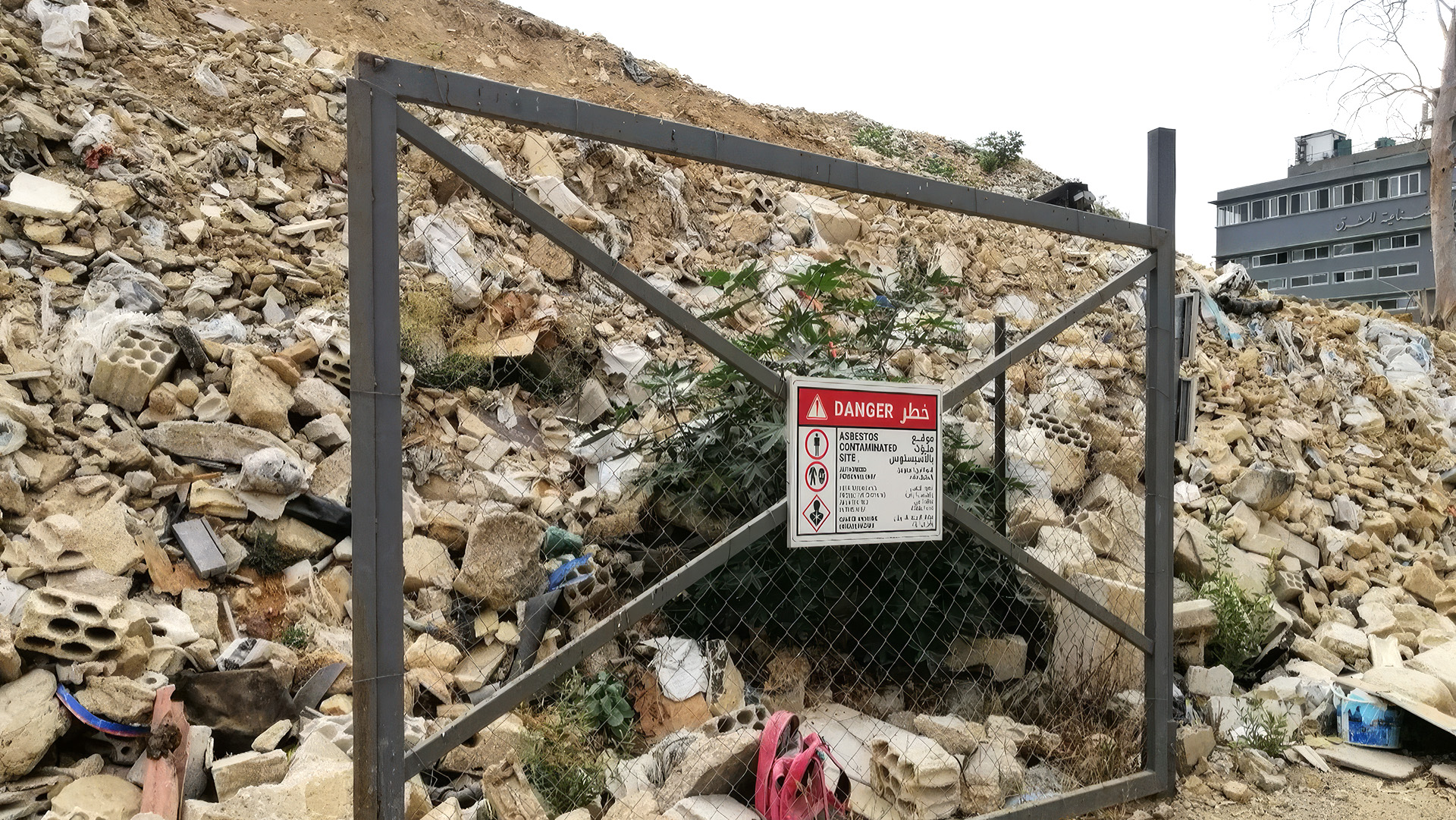
Launched in 2022, the Beirut Critical Environment Recovery, Restoration, and Waste Management Program aimed at responding to urgent and critical environmental issues arising out of the Port of Beirut explosion on August 4, 2020. The Project’s interventions were designed towards the management and disposal of demolition waste generated from the damaged buildings and asbestos contaminated waste, as well as the rehabilitation of the damaged solid waste infrastructure and facilities that serve Beirut City along with the provision of technical assistance measures for the sustainable operation of facilities, support environmental control measures, and plan for longer term environmental restoration efforts in Beirut City. The Project is financed by Lebanon Financing Facility, a multi donor trust fund administered by the World Bank and implemented by the UNDP, in close coordination with the Ministry of Environment.
Activities
During project preparation, Ecocentra was assigned by UNDP to prepare the Environmental and Social Management Framework (ESMF) and other safeguards instruments for this Project to align with the World Bank Environmental and Social Framework. The ESMF included a structured approach to identify, assess, and manage environmental and social risks associated with all Project interventions, providing specific procedures and technical guidance for impact assessment during implementation. In addition, a Stakeholder Engagement Plan (SEP) and Labour Management Procedures (LMP) were prepared as two stand-alone documents.
For the SEP, Ecocentra identified primary stakeholders including institutions and community groups and determined their interest in and influence on the Project. The SEP outlined the activities for engaging stakeholders throughout the Project cycle, detailing communication strategies, public information disclosure, consultations, and handling community grievances.
In the LMP, Ecocentra identified the main labor requirements and risks associated with Project interventions and determined the resources necessary to address labor concerns. The LMP covered roles and responsibilities for ensuring proper implementation, occupational health and safety, labor influx policies and procedures, age of employment, wages and working hours, equal opportunity and non-discrimination, training and capacity building. The LMP also included guidance on establishing a worker grievance mechanism and included a Code of Conduct (CoC) to address sexual exploitation and abuse/sexual harassment (SEA/SH) risks.
Ecocentra presented these instruments to various stakeholders during a disclosure session and incorporated their feedback into the final versions that were disclosed (https://www.undp.org/lebanon/publications/beirut-critical-environment-recovery-restoration-and-waste-management-p176635).