
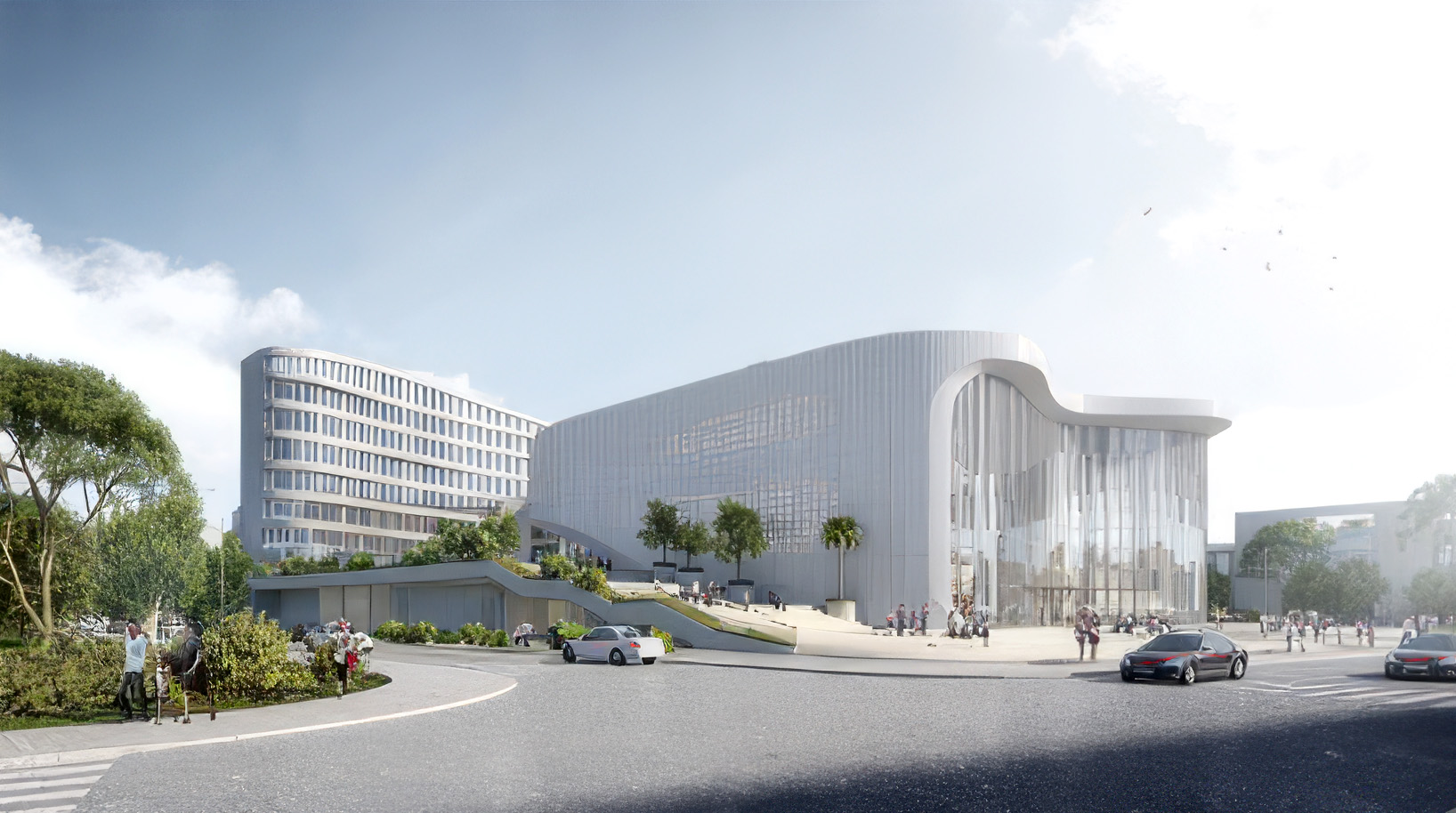
Due to their small areas and limited capacities, the different branches of the Lebanese National Higher Conservatory of Music had been experiencing an overload of students. To address this problem, the Ministry of Culture with support from the Council for Development and Reconstruction (CDR) and funding from China Aid, planned the construction of a music conservatory in Naccach area of Mount Lebanon Governorate, which serve as the main institute for obtaining certified degrees in music in Lebanon. This would contribute to the protection of music heritage in Lebanon, thus strengthening the cultural values of the country through transmitting knowledge from one generation to another, offering educational experiences and increasing job opportunities.
The conservatory is constructed on a 14,812 m² reclaimed coastal site and consists of one block divided into an 8-floor conservatory building and a 1,200-seat grand music hall consisting of three floors. The facility also includes a smaller 357-seat recital hall, teaching rooms, offices, and a cafeteria, with green roof gardens and landscaped areas. The conservatory also has a parking area at the basement level with 159 parking lots. It is designed to high sustainability and safety standards and features energy-efficient systems, on-site water treatment, advanced sound insulation, and fire and lightning protection. During the planning process for this project, Ecocentra was commissioned by CDR to carry out an Initial Environmental Examination to ensure adherence to environmental regulations and standards during its construction and operation and obtain Ministry of Environment approval.
Activities
The main activities undertaken by Ecocentra included baseline assessments of the physical environment, biodiversity, and socioeconomic conditions, conducted through site visits and literature review. Environmental and social risks associated with the construction and operation of the conservatory were identified. An environmental management plan that includes a monitoring program was developed to mitigate these risks.